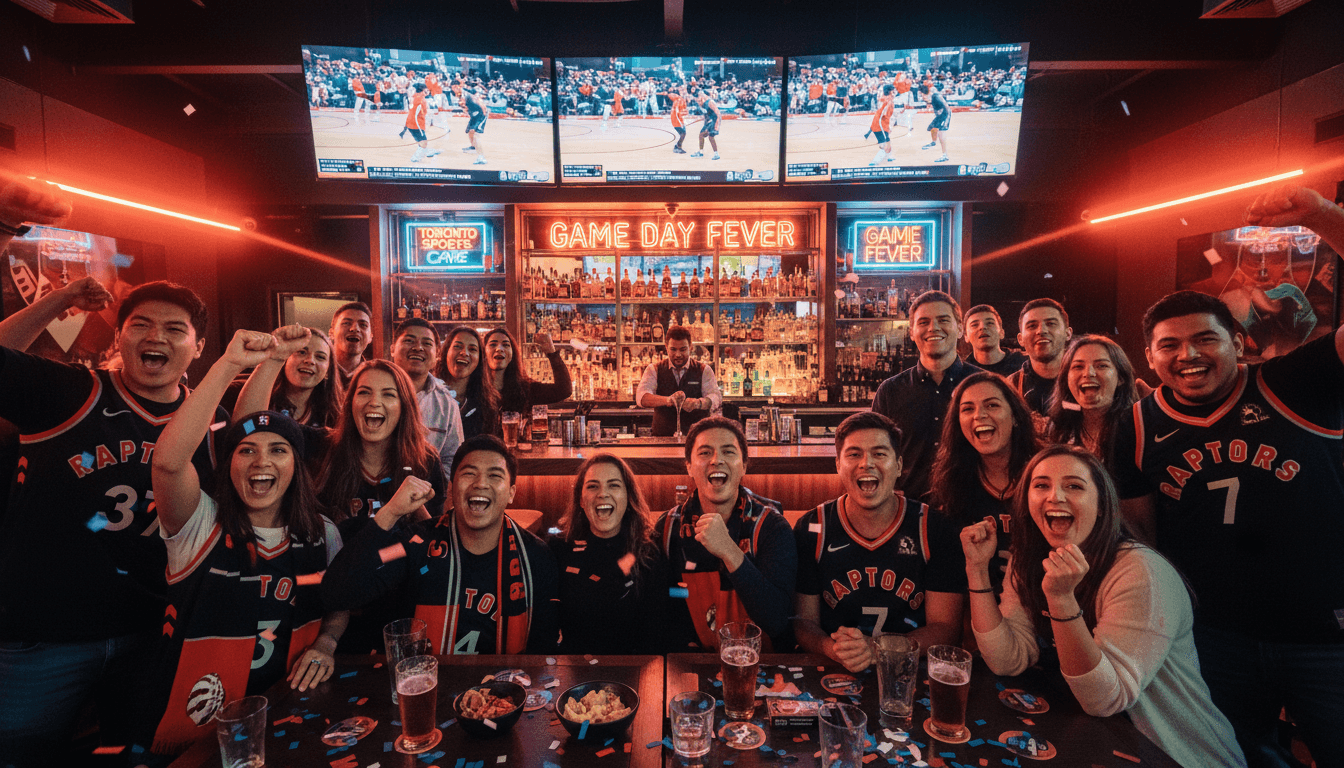
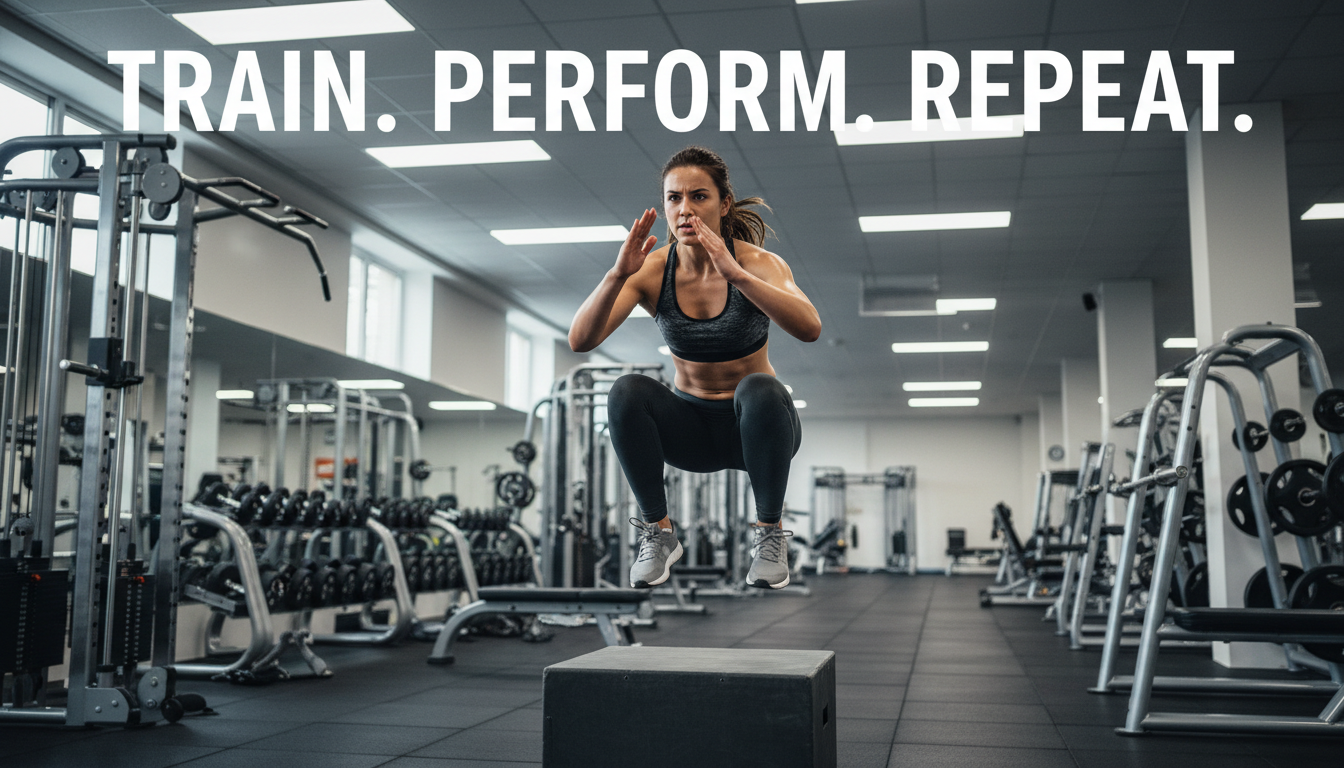
The New Era of Athletic Fitness
TSports Magazine | Fitness & Performance Exclusive!
"Talent might get an athlete noticed. Preparation determines what happens next."
There is a moment in almost every game when natural ability stops being enough. Maybe it's the fourth quarter and a basketball player's legs are starting to feel heavy. Maybe it's late in the third period and a hockey player has to find enough energy for another hard shift. Maybe it's the final innings of a baseball game, when concentration becomes just as important as strength. Perhaps it's a football player lining up late in the game, knowing the next few seconds could decide everything. Or maybe it's the closing minutes of a soccer match, when a player has already spent nearly the entire game running, defending and attacking—and suddenly has to find enough speed for one more decisive sprint.
This is where training shows up.
Not the workout posted online. Not the personal-best lift. Not the expensive shoes, smartwatch or latest fitness trend.
The real training.
The early mornings. The repetitions. The recovery days. The meals chosen with purpose. The sprint nobody was watching. The final set when quitting would have been easier.
Modern sports performance is being built long before the stadium lights come on.
"The best athletes don't simply train harder. They learn how to train with purpose."
THE ATHLETE HAS CHANGED
Today's athlete is expected to do more. Speed alone isn't enough. Strength alone isn't enough. Endurance alone isn't enough. The modern athlete needs a combination of strength, speed, power, mobility, coordination, endurance, recovery and mental resilience.
That has changed the way athletes train.
Traditional weight training still has an important role. Squats, presses, pulls and other fundamental exercises can build an excellent strength foundation. But sports performance requires athletes to take that strength and apply it to movement.
Can you accelerate?
Can you stop under control?
Can you change direction?
Can you jump explosively?
Can you maintain your technique when you're tired?
Can you recover and do it again?
Those questions tell us far more about athletic readiness than the number printed on the side of a dumbbell.
BUILT FOR THE GAME
Every sport places different demands on the body. The smartest training programs recognize those differences rather than treating every athlete the same.
BASKETBALL — EXPLOSION & AGILITY
Basketball athletes constantly accelerate, jump, land, stop and change direction.
Training should reflect that reality.
Lower-body strength provides a foundation, while jumping exercises, sprint training, lateral movement and core stability can help athletes turn strength into usable athletic power. But basketball conditioning isn't simply about being able to run for a long time.
Players need the ability to repeatedly produce short bursts of high-intensity movement, recover quickly and perform again. That difference matters.
HOCKEY — POWER ON ICE
Few sports combine speed, strength and balance quite like hockey. Players accelerate aggressively, battle for position, rotate through shots and passes, absorb contact and perform repeated high-intensity shifts. Strong legs are essential, but so are hip mobility, rotational strength, core stability and conditioning.
The goal isn't simply to build muscle. It's to build muscle that works.
FOOTBALL — CONTROLLED POWER
Football may be played in short bursts, but those seconds can be incredibly demanding. Acceleration, explosive strength, agility and reaction speed can all influence performance. Position matters too. The physical preparation of an offensive lineman shouldn't look identical to that of a wide receiver.
Both are football players.
Their bodies are being asked to solve very different problems.
BASEBALL — ROTATION, SPEED & PRECISION
Baseball sometimes appears less physically demanding because much of the game unfolds at a measured pace. That perception changes quickly when you examine the movements. Throwing a baseball at high velocity requires coordinated force from the ground through the legs, hips, torso, shoulder, arm and hand. Hitting requires its own explosive rotational sequence.
Running the bases demands acceleration.
Fielding requires reaction and agility.
Baseball athletes don't need meaningless bulk. They need usable strength, mobility, coordination and rotational power.
SOCCER — ENDURANCE, SPEED & CONTROL
Soccer presents one of the most demanding combinations of endurance, speed, agility and technical skill in sports. A player may cover significant distance during a match, but soccer fitness isn't simply about being able to run for a long time. Players repeatedly accelerate, decelerate, sprint, change direction, challenge for the ball and recover—all while maintaining the concentration and technical control required to make the next play.
That makes soccer conditioning unique.
Players need a strong aerobic foundation to sustain their effort throughout a match, but they also need explosive power for the moments that can change a game.
A sudden sprint behind the defence.
A quick change of direction.
A powerful strike.
An explosive jump for a header.
A defender recovering after being beaten.
Those actions may last only seconds, but they can determine the outcome of a possession—and sometimes the match.
Lower-body strength is especially important. Strong glutes, hamstrings, quadriceps and calves contribute to acceleration, jumping, kicking and stability. Core strength also helps players maintain balance while changing direction, shielding the ball or absorbing contact. But strength without mobility and control can become limiting.
Soccer players need hips, ankles and knees capable of moving efficiently through thousands of repetitions. Training should therefore combine strength with mobility, balance, coordination and controlled deceleration.
There is another factor that separates soccer from many sports: technical ability must survive fatigue.
It is one thing to deliver a perfect pass during warm-up.
It is another to make that same pass late in a match after repeated sprints.
The same applies to shooting, defending and decision-making.
That's why effective soccer conditioning shouldn't simply exhaust the athlete. It should prepare the athlete to continue performing skills accurately when fatigue begins to take over.
The modern soccer player is part endurance athlete, part sprinter and part technical specialist.
The best training recognizes all three.
Because when the match reaches its closing minutes and fatigue begins affecting everyone on the pitch, fitness becomes more than conditioning.
It becomes a competitive tool.
SPEED: THE GREAT SEPARATOR
Strength gets attention.
Speed changes games.
And true athletic speed isn't simply about winning a 100-metre race. In many sports, the first three or four steps are far more important.
A defender closes space.
A receiver creates separation.
A basketball player attacks an opening.
A baseball player explodes toward second.
A soccer player breaks behind the defensive line.
Those moments happen quickly.
Acceleration training therefore deserves serious attention.
Short sprints, resisted movement, reaction drills and proper running mechanics can help athletes become more efficient at producing force rapidly.
Then comes another skill that doesn't receive nearly enough attention:
Stopping.
Athletes spend enormous amounts of time learning how to accelerate, but competition repeatedly requires them to decelerate.
Being able to slow the body under control before changing direction is a legitimate athletic skill.
Sometimes becoming faster begins with learning how to stop.
STRENGTH WITHOUT MOVEMENT IS INCOMPLETE
Strength remains one of the foundations of athletic development.
A stronger athlete may be capable of producing greater force, maintaining better body control and tolerating physical demands more effectively.
But there is an important distinction between being strong and being athletically strong.
An impressive bench press doesn't automatically create a better basketball player.
A massive squat doesn't automatically produce a faster hockey player.
And adding muscle without maintaining movement quality doesn't automatically create a better football, baseball or soccer player.
The weight room should support performance rather than become the performance.
Athletes need enough mobility to access useful positions, enough stability to control them and enough power to move through them explosively.
That is when strength becomes athletic.
TSports Performance Principle
Don't train only to move more weight. Train to move your body better.
THE RECOVERY REVOLUTION
Perhaps the biggest evolution in fitness has happened outside the gym.
Recovery has become part of the program. Athletes once wore exhaustion almost like a badge of honour. More workouts meant more dedication. More sweat meant more progress.
The picture is considerably more complicated.
Training creates stress.
The body needs an opportunity to adapt to that stress.
Without adequate recovery, performance can suffer.
Sleep therefore deserves the same seriousness as training.
Rest days matter.
Hydration matters.
Nutrition matters.
Managing overall training volume matters
This doesn't mean athletes should avoid hard work.
Quite the opposite.
It means hard work should have a purpose.
There is little value in destroying yourself during Tuesday's workout if you're supposed to perform at your best Wednesday night.
FUEL THE ATHLETE
You wouldn't expect a high-performance vehicle to operate properly without fuel.
Athletes aren't much different.
Food provides the energy required to train and the nutrients needed for recovery. Carbohydrates can help fuel demanding activity. Protein provides amino acids needed for muscle repair and growth. Dietary fats play important roles throughout the body. Fluids and electrolytes also become increasingly important as training intensity and duration rise.
Yet athletes sometimes spend more time researching supplements than improving their everyday eating habits.
Supplements can have specific uses, but they don't replace fundamentals.
Food first.
Hydration.
Consistency.
Then examine the details.
THE 24-HOUR ATHLETE
One of the most useful ideas in modern sports training is that athletes aren't athletes only during practice.
Performance is influenced by what happens throughout the entire day.
1 hour training
23 hours living
Those other hours matter.
How much did you sleep?
What did you eat?
How hydrated are you?
How much physical stress have you accumulated?
How much mental stress are you carrying?
The answers eventually follow you onto the court, field, pitch or ice.
The workout might last 60 minutes.
Athletic preparation lasts all day.
THE MENTAL REP
Then there is the part nobody can see.
Confidence.
Focus.
Composure.
Sports place athletes in uncomfortable situations.
The missed shot.
The turnover.
The strikeout.
The dropped pass.
The missed penalty.
The bad game.
The injury.
The criticism.
Physical conditioning cannot prevent those moments Mental preparation can help an athlete respond to them.
Visualization, breathing exercises, routines and goal setting are increasingly used alongside physical training.
The objective isn't to create an athlete who never feels pressure. That athlete probably doesn't exisisn't. The objective is to develop someone capable of functioning when pressure arrives.
"You don't need to feel fearless to compete. You need to remain effective when you're uncomfortable."
THE WEEKEND ATHLETE MATTERS TOO
High-performance training isn't exclusively for professionals.
The principles can benefit almost anyone.
You may be playing pickup basketball on Saturday mornings instead of competing professionally.
You may play recreational hockey.
You might join a weekend soccer league.
You may coach youth football or baseball.
You may simply want to remain active enough to play sports with your children.
The level changes.
The importance of physical preparation doesn't.
In fact, strength, cardiovascular fitness, mobility and balance may become increasingly valuable as people get older. Training at 45 doesn't need to look like training at 20.
The objective evolves.
Instead of chasing only maximum performance, the focus may shift toward staying strong, moving well and remaining capable.
There is something powerful about that.
Fitness allows sports to remain part of your life rather than something you used to do.
STOP CHASING THE HIGHLIGHT
Social media has changed fitness.
We see spectacular dunks.
Huge lifts.
Six-pack transformations.
Sprint times.
Last-minute goals.
Workout montages.
What we rarely see is everything between those moments.
Nobody posts the ordinary Tuesday workout where nothing remarkable happened.
Nobody celebrates going to bed on time.
Recovery isn't particularly exciting content.
Neither is doing the same fundamental exercise correctly for the thousandth time.
But that's where athletes are built.
Behind almost every spectacular sports moment are hundreds of completely ordinary training sessions.
The highlight lasts seconds.
Preparation can take years.
THE TSports PERFORMANCE CHECKLIST
TRAIN WITH PURPOSE
Know why an exercise is in your program.
BUILD STRENGTH
Create a physical foundation capable of supporting your sport.
DEVELOP SPEED
Practice acceleration, reaction and controlled changes of direction.
MOVE WELL
Mobility and stability deserve a place alongside strength.
CONDITION FOR YOUR SPORT
Prepare for the actual demands of competition.
EAT TO PERFORM
Give your body enough quality fuel to train and recover.
PRIORITIZE SLEEP
Recovery isn't optional.
TRAIN YOUR MIND
Confidence and composure can be practiced too.
LISTEN TO YOUR BODY
Pain and normal training discomfort aren't necessarily the same thing. Know when something requires professional attention.
STAY CONSISTENT
One extraordinary workout will never outperform months of intelligent training.
THE FINAL REP
Sports have always celebrated results.
The scoreboard.
The championship.
The personal record.
The winning shot.
The game-winning goal.
But those moments tell only the final part of the story.
Athletic performance is built quietly.
It is built when nobody is watching.
One workout.
One meal.
One recovery day.
One decision.
One repetition at a time.
The goal isn't simply to become stronger.
It isn't simply to become faster.
The goal is to create a body and mindset capable of performing when the moment arrives.
Because eventually the lights come on.
The crowd gets louder.
The clock starts moving.
And at that point, training is over.
It's time to perform.
TSports Magazine
Your Team. Your Gear. Your Game.